Dian Fossey Biography | Gorilla Research and Legacy
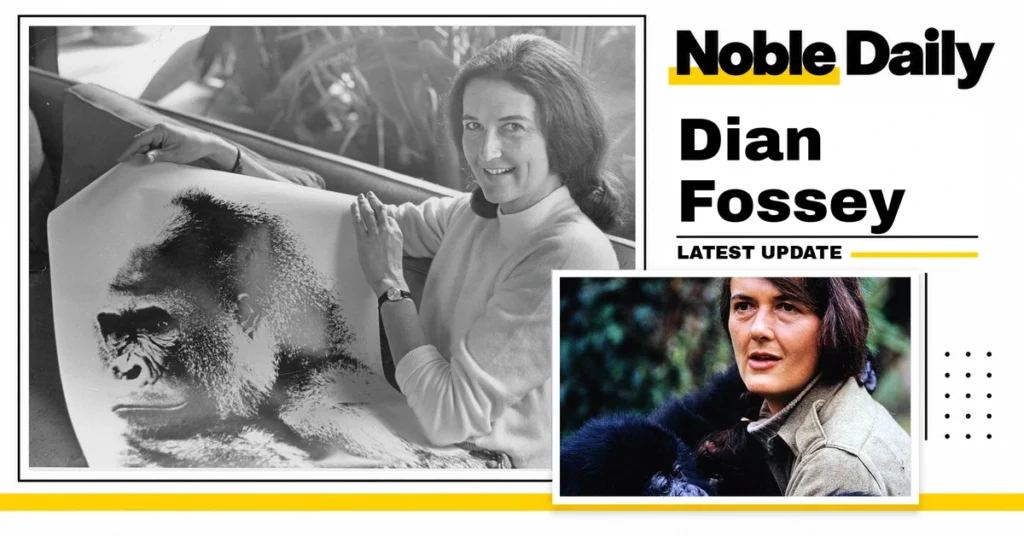
Dian Fossey was an American primatologist and conservationist who became known for studying and protecting mountain gorillas in Rwanda. Her close observations changed how many people understood gorilla behavior, while her campaign against poaching brought worldwide attention to the animals. Her work continues through conservation research inspired by her legacy.
Who Is Dian Fossey?
Dian Fossey was a pioneering scientist who spent nearly two decades studying mountain gorillas in the Virunga Mountains of Central Africa. She combined long-term field research with direct efforts to stop poaching, a forceful approach that helped draw attention to the danger facing the gorillas and also brought conflict.
| Full name | Dian Fossey |
| Born | January 16, 1932, in San Francisco, California, United States |
| Died | December 26, 1985, in Rwanda, aged 53 |
| Nationality | American |
| Known for | Mountain gorilla research and conservation |
| Education | San Jose State College and the University of Cambridge |
| PhD | Zoology, University of Cambridge, 1974 |
| Research center | Karisoke Research Center, founded in 1967 |
| Major book | Gorillas in the Mist, published in 1983 |
| Spouse and children | Never married and had no children |
What Was Dian Fossey’s Childhood Like?
Dian Fossey was born in San Francisco on January 16, 1932, to George Fossey and Kitty Kidd. Her parents separated when she was young, and her mother later married Richard Price.
Biographical accounts describe her home life as difficult, though the details of her childhood should not be treated as the only explanation for the choices she made as an adult.
As a child and teenager, Fossey loved animals and horses. She first considered becoming a veterinarian, but she did not follow that path. Instead, she studied occupational therapy, a field that trained her to work patiently with people and observe behavior. She graduated from San Jose State College in 1954.
How Did Dian Fossey Begin Her Career in Africa?
Fossey’s first major trip to Africa took place in 1963, after she saved money and borrowed funds to pay for the journey. While visiting Tanzania, she met the researchers Louis and Mary Leakey at Olduvai Gorge.
She also saw mountain gorillas during her travels in Central Africa, an encounter that made her determined to return and study them.
In 1966, Fossey met Louis Leakey again during a lecture in Kentucky and discussed the need for long-term research on great apes. With support that included funding from the National Geographic Society, she began fieldwork in what is now the Democratic Republic of the Congo.
Political unrest forced her to leave the area in 1967, and she moved her work across the border to Rwanda.
Why Did She Establish the Karisoke Research Center?
Fossey established the Karisoke Research Center on September 24, 1967, in Rwanda’s Virunga Mountains. The camp stood in a valley between Mount Karisimbi and Mount Visoke, and its name combined parts of the two mountain names. It became the base for her long-term study of mountain gorilla groups.
Fossey spent much of each day in the forest, recording feeding habits, vocal sounds, family relationships, and changes in group behavior. To help the gorillas accept her presence, she moved slowly, copied some of their gestures, and used sounds they made.
This process, known as habituation, allowed researchers to observe animals at close range without constantly causing them to flee.
Her work depended on local trackers, field staff, and research assistants, not only on Fossey herself. Their knowledge of the landscape and the gorillas helped make the research possible. A 1970 National Geographic cover story brought her work to a much wider audience.
What Did Dian Fossey Teach the World About Mountain Gorillas?
Fossey’s long-term observations helped show that mountain gorillas have complex social lives and distinct individual behaviors. Rather than treating them as frightening or aggressive animals, she documented their family bonds, play, communication, feeding patterns, and daily routines. Her research helped challenge popular myths about gorillas.
Her field notes and studies added detail to scientific knowledge about gorilla behavior. Among the important parts of her work were:
- Recording how gorillas communicated through calls, gestures, and chest beating.
- Observing family groups, social rank, and the movement of females between groups.
- Documenting feeding patterns and how gorillas used their forest habitat.
- Showing how careful, repeated observation could reveal behavior that brief visits might miss.
Who Was Digit and Why Did His Death Change Her Work?
Digit was a young mountain gorilla Fossey came to know during her research, and he became one of the animals most closely linked with her story. His name referred to an injury to one of his fingers.
Fossey observed him over several years and described him in her writing as a memorable individual rather than simply a member of a group.
Digit was killed by poachers in 1977. His death made the threat of poaching painfully personal for Fossey and pushed her toward more direct protection work. In 1978, she established the Digit Fund to support anti-poaching patrols and gorilla protection. The fund later became the Dian Fossey Gorilla Fund.
How Did Dian Fossey Earn Her PhD and Share Her Research?
Fossey earned a PhD in zoology from the University of Cambridge in 1974. Her dissertation focused on the behavior of mountain gorillas, giving her field observations a formal place in academic research. She later taught at Cornell University as a visiting associate professor while continuing to support the work at Karisoke.
Her book Gorillas in the Mist, published in 1983, brought together years of fieldwork, scientific observation, and personal experience. It explained how she learned to observe gorillas and why she believed their survival required active protection. The book also helped readers understand the daily effort behind long-term wildlife research.
Did Dian Fossey Have a Husband or Children?
Dian Fossey never married and had no children. Accounts of her life discuss romantic relationships, including her connection with wildlife photographer Bob Campbell, but these details do not change the central fact that her adult life was largely organized around research and conservation in Africa.
Fossey’s private life has sometimes been simplified in popular retellings. The 1988 film based on her life gives emotional weight to personal relationships, but a feature film is a dramatization, not a complete record of every event. Her own book and historical reporting offer more context for understanding her work.
How Did Dian Fossey Die in 1985?
Dian Fossey was murdered at her cabin near the Karisoke Research Center in Rwanda in December 1985, when she was 53 years old. The date commonly used by the Dian Fossey Gorilla Fund is December 26, 1985.
Contemporary reports described her as being found dead on December 27, which explains why both dates appear in historical accounts.
Reports said she had suffered fatal head injuries from a machete. Her death shocked colleagues and conservation supporters, especially because she had spent years opposing poaching and confronting people she believed threatened the gorillas. The exact circumstances and motive have remained disputed.
Who Killed Dian Fossey and Why Is the Case Disputed?
No account of Dian Fossey’s murder has achieved universal acceptance. In December 1986, a Rwandan tribunal convicted her former research assistant Wayne McGuire in absentia and sentenced him to death. McGuire had returned to the United States before the trial and denied killing Fossey.
The proceedings took place without McGuire present, and no defense case was heard. Rwandan authorities alleged that he wanted to take a manuscript connected to a planned follow-up to her book.
Other accounts have explored possible links to Fossey’s anti-poaching campaign and conflicts around the research center, but these theories should not be presented as proven facts. The conviction is part of the historical record, while the murder remains disputed in many accounts.
How Did Gorillas in the Mist Shape Her Public Legacy?
The 1988 film Gorillas in the Mist introduced Fossey’s life and work to a broad movie audience. Sigourney Weaver played Fossey, and the film received five Academy Award nominations. Weaver was nominated for Best Actress, helping bring further attention to the scientist and the mountain gorillas she studied.
The movie is a biographical drama rather than a documentary, so it compresses events and heights some personal conflicts. Even so, it helped keep Fossey’s conservation work in public view. Her 1983 book remains a direct account of her research, while the film is one interpretation of her life.
What Is the Dian Fossey Gorilla Fund Today?
The Dian Fossey Gorilla Fund continues the conservation mission that grew from Fossey’s research and the Digit Fund. Its work includes scientific study, protection of gorillas and their habitat, training for researchers, and support for communities living near wildlife areas. Conservation today depends on local expertise and long-term cooperation as well as on public attention.
Fossey’s legacy is significant, but it is not the work of one person alone. Park staff, Rwandan trackers, scientists, community members, and conservation groups have all contributed to the protection of mountain gorillas. The species’ recovery reflects many years of shared effort, and ongoing threats mean that research and protection remain necessary.
Key milestones in Fossey’s life and work include:
- 1963: She made her first trip to Africa and saw mountain gorillas.
- 1967: She established the Karisoke Research Center in Rwanda.
- 1974: She completed her PhD in zoology at the University of Cambridge.
- 1978: She created the Digit Fund to support gorilla protection.
- 1983: She published Gorillas in the Mist.
What Is Known About Dian Fossey’s Net Worth and Awards?
There is no reliable public net worth figure for Dian Fossey, and sources about her life focus more on her scientific contributions and conservation work than on a definitive list of personal awards. Specific online estimates of her wealth should therefore be treated with caution.
Fossey’s name is now closely associated with mountain gorilla research and the global effort to protect the species. Her story has appeared in books, documentaries, museum exhibits, and the 1988 film. These tributes have helped preserve public interest, while the ongoing work of conservation teams gives her legacy practical meaning.
Dian Fossey’s story is often told alongside the other pioneering primatologists whose lives are covered here: Jane Goodall, Biruté Galdikas, Frans de Waal, and Robert Sapolsky.
Conclusion
Dian Fossey changed the study and protection of mountain gorillas through years of careful observation and direct conservation work. Her research at Karisoke helped reveal the animals’ social complexity, while her campaign against poaching made their survival a worldwide concern.
Her murder left unanswered questions, but the work inspired by her remains active through scientists, local conservation teams, and the Dian Fossey Gorilla Fund.