Anthony Fauci | Biography, Age, Career & 2026 Updates
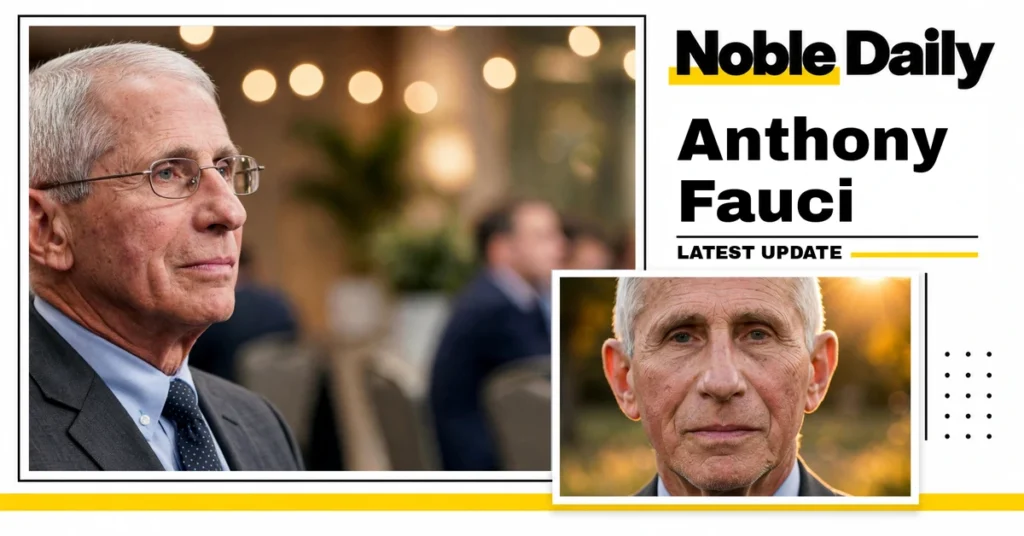
Anthony Fauci is an American physician and immunologist who led the National Institute of Allergy and Infectious Diseases for nearly four decades. He advised seven presidents, helped shape the HIV/AIDS response, and became a leading public voice during COVID-19.
Who Is Anthony Fauci?
Anthony Fauci is a physician-scientist best known for leading the National Institute of Allergy and Infectious Diseases (NIAID) from 1984 to 2022. His work has covered immune system research, HIV/AIDS, emerging infections, and national health policy. After leaving federal service, he joined Georgetown University as a professor.
| Full name | Anthony Stephen Fauci |
| Date of birth | December 24, 1940 |
| Age | 85 years old as of 2026 |
| Birthplace | Brooklyn, New York, United States |
| Nationality | American |
| Profession | Physician, immunologist, infectious disease researcher, author |
| Education | College of the Holy Cross, 1962, Cornell University Medical College, 1966 |
| Wife | Dr. Christine Grady, married in 1985 |
| Children | Three daughters |
| Former position | Director of NIAID, 1984 to 2022 |
| Current academic role | Distinguished University Professor at Georgetown University |
| Memoir | On Call: A Doctor’s Journey in Public Service, published in 2024 |
How Old Is Anthony Fauci?
Anthony Fauci is 85 years old as of 2026. He was born on December 24, 1940, in Brooklyn, New York, so his 86th birthday will take place later in 2026.
Where Was Anthony Fauci Born and Raised?
Fauci was born and raised in Brooklyn in an Italian American family. His father, Stephen, was a pharmacist who ran a neighborhood drugstore, and his mother, Eugenia, studied at Brooklyn College and Hunter College. The family lived above the pharmacy, and Fauci helped with small jobs and deliveries while growing up.
He attended Catholic schools, including Regis High School, a Jesuit school in Manhattan. He traveled there from Brooklyn by bus and three subway trains.
What Did Anthony Fauci Study?
Fauci graduated from the College of the Holy Cross in 1962. He combined premedical studies with classics, philosophy, Greek, and Latin, an education he later said shaped his approach to medicine.
He earned his medical degree from Cornell University Medical College in 1966, now known as Weill Cornell Medicine. After his internship and residency at New York Hospital-Cornell Medical Center, he joined the NIH in 1968.
Who Is Anthony Fauci’s Wife?
Fauci’s wife is Dr. Christine Grady, a bioethicist who held senior roles at the NIH Clinical Center. They met at the NIH in 1983, when Grady was a nurse, and married in 1985.
How Many Children Does Anthony Fauci Have?
Fauci and Christine Grady have three daughters named Jennifer, Megan, and Alison. The family has generally kept its private life away from public attention.
What Is Anthony Fauci’s Net Worth?
No official source confirms Fauci’s exact personal net worth in 2026. Public financial disclosures do not provide a complete current total. An analysis of filings placed Fauci and Grady’s combined reported financial assets above $15 million at the end of 2023. That is a household figure, not a verified personal net worth.
How Did Anthony Fauci Build His Medical Career?
Fauci built his career through patient care, laboratory research, and NIH leadership. He joined NIAID in 1968 and became its director in 1984.
What Was Anthony Fauci’s Early Research Breakthrough?
Fauci’s early research helped change treatment for serious immune-related diseases. With colleagues, he studied low-dose cyclophosphamide and prednisone for conditions such as Wegener’s granulomatosis, now called granulomatosis with polyangiitis. The treatment helped turn a once often-fatal disease into one that could enter long remission.
How Did Fauci Help Change the HIV/AIDS Response?
Fauci became one of the leading federal figures in the U.S. response to HIV/AIDS during the 1980s. After becoming NIAID director in 1984, he pushed for a major increase in AIDS research funding and helped establish a dedicated Division of AIDS within the institute.
Fauci’s early relationship with AIDS activists was difficult. Many patients and advocates believed the government was moving too slowly. He later met with groups such as ACT UP and supported a stronger role for people with HIV in research planning and clinical trial decisions.
What Was His Role in PEPFAR?
Fauci was one of the principal architects of the President’s Emergency Plan for AIDS Relief, known as PEPFAR. President George W. Bush launched the program in 2003 to expand HIV prevention, testing, and treatment in countries with high rates of infection.
The program has helped save more than 25 million lives, according to Fauci’s official biography.
Which Presidents Did Fauci Advise?
Fauci served as a key health and science adviser to seven U.S. presidents, from Ronald Reagan through Joe Biden. He also became Biden’s chief medical adviser, a role he held until leaving federal service in December 2022.
Why Did Anthony Fauci Become a Central Figure During COVID-19?
Fauci became a central public figure during COVID-19 because he led NIAID and regularly explained the science behind the federal response. He appeared at White House briefings and spoke with news organizations.
What Was Fauci’s Role in the COVID-19 Response?
Fauci advised the federal government during the pandemic and served on the White House Coronavirus Task Force under President Donald Trump. He later became President Biden’s chief medical adviser. His role included explaining new evidence and overseeing NIAID-supported research.
Fauci did not control every pandemic rule. State and local governments, school boards, and other federal officials made many decisions about closures, mandates, and restrictions.
Why Did Anthony Fauci Face Criticism?
Fauci faced criticism over changing guidance, mask recommendations, school closures, social distancing, vaccine policies, and the early federal response. Critics called some advice inconsistent, while supporters said recommendations changed as evidence developed.
The debate became political, with some conservatives seeing Fauci as a symbol of restrictions and many public health experts defending his efforts to explain changing evidence.
What Is Known About the COVID-19 Origin Debate?
The exact origin of SARS-CoV-2 has not been established. A 2025 World Health Organization review said the weight of available evidence suggested animal-to-human spillover, but a laboratory incident could not be ruled out because key information was missing.
The dispute also concerns research funding and the meaning of gain-of-function research. NIH grant money reached research at the Wuhan Institute of Virology through the nonprofit EcoHealth Alliance. Fauci said the work did not meet the U.S. government’s definition of gain-of-function research.
In June 2026, the Office of the Director of National Intelligence released documents and allegations challenging his role in the debate. Those claims have been disputed and do not settle the scientific question of the virus’s origin.
What Did Fauci’s Diary and 2026 Senate Hearing Reveal?
In July 2026, Senator Rand Paul released more than 1,100 pages of Fauci’s pandemic-era diary notes, covering December 2019 to December 2022. Paul said the notes raised questions about Fauci’s private views and public statements. Fauci’s representatives said the material matched what he had said publicly.
On July 29, 2026, Fauci appeared before the Senate Homeland Security and Governmental Affairs Committee. He invoked his Fifth Amendment right against self-incrimination on his lawyers’ advice. On August 6, the committee advanced a contempt resolution.
The Justice Department said it had received the referral and was reviewing it. A committee vote is not a criminal conviction.
Did Joe Biden Pardon Anthony Fauci?
President Joe Biden issued Fauci a full and unconditional federal pardon on January 19, 2025. It covered federal offenses from January 1, 2014, through the date of the pardon that were connected to Fauci’s service as NIAID director, a member of the White House COVID-19 response teams, or chief medical adviser to the president.
The pardon did not cover conduct after January 19, 2025, and it was not a finding that Fauci had committed a crime.
What Is Anthony Fauci Doing After Government Service?
Fauci left federal leadership in December 2022 but continued his work in medicine, teaching, public health discussion, and writing.
Does Anthony Fauci Still Work at Georgetown?
Fauci joined Georgetown University on July 1, 2023, as a Distinguished University Professor in its School of Medicine and McCourt School of Public Policy. He is also a Distinguished Senior Scholar at the O’Neill Institute.
Fauci continues to speak with students and medical professionals. On October 28, 2026, he took part in a Johns Hopkins event about lessons from HIV/AIDS and his career in public service.
What Is Anthony Fauci’s Book On Call About?
Fauci’s memoir, On Call: A Doctor’s Journey in Public Service, was published in June 2024. It follows his life from Brooklyn through more than five decades in medicine and government, including his work on HIV/AIDS, advice to seven presidents, and role during COVID-19.
Which Awards and Honors Has Anthony Fauci Received?
Fauci has received major honors for his research, leadership, and public health work.
- Presidential Medal of Freedom, awarded in 2008.
- National Medal of Science, selected in 2005 and presented in 2007.
- Mary Woodard Lasker Award for Public Service, received in 2007.
- American Academy of Arts and Sciences Award for Excellence in Public Policy and Public Affairs, presented in 2025.
- American Academy of Allergy, Asthma & Immunology Distinguished Scientist Award, presented in 2026.
Fauci is a member of the National Academy of Sciences, the National Academy of Medicine, and the American Academy of Arts and Sciences. He has authored, coauthored, or edited more than 1,400 scientific publications.
For more profiles from the world of medicine, explore the biographies of Peter Attia, Terry Dubrow, Paul Nassif and Jeffrey Rebish.
What Is Anthony Fauci’s Legacy?
Fauci’s legacy includes decades of medical research, leadership during major outbreaks, and a lasting role in U.S. public health. His work on immune-related diseases and HIV/AIDS helped change treatment and research practices, while PEPFAR linked American science with care around the world.
His public image became divided during COVID-19, when health guidance and government authority became political issues. Debates about pandemic policy, research funding, and the virus’s origin continue to shape views of his career.